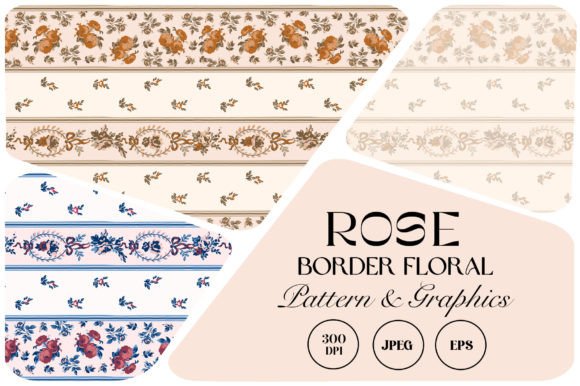
Ethnic Rose Border Floral Pattern: A Versatile Asset for Modern Design
In the landscape of digital design assets, few categories offer as much immediate aesthetic impact as Ethnic Rose Border Floral Pattern collections. These motifs are not merely decorative overlays; they represent a synthesis of traditional craftsmanship and modern technical precision. For professionals ranging from interior designers to fashion entrepreneurs, the value lies in how these patterns bridge the gap between cultural heritage and contemporary application. The specific iteration of this asset, characterized by exquisitely selected motif elements and patchwork compositions, addresses a critical need for high-quality, scalable graphics that maintain integrity across diverse media.
The core appeal of this pattern set is its structural versatility. Unlike generic floral backgrounds that often feel flat or repetitive, the ethnic rose border features a distinct patchwork arrangement. This technique mimics the tactile reality of textile weaving and embroidery, adding depth and visual interest without overwhelming the viewer. When evaluating resources for commercial use, the distinction between a simple clip art image and a fully realized seamless pattern becomes paramount. This collection delivers on that front by providing large seamless patterns alongside individual motifs, allowing designers to adapt the artwork to both expansive applications like wall coverings and precise uses such as packaging labels.
Technical Specifications and Print Readiness
One of the most significant factors determining the utility of any digital asset is its technical fidelity. In the context of print production, where resolution and color accuracy are non-negotiable, the specifications of this pattern set stand out. The inclusion of two EPS files ensures that users have access to vector-based source material. This format is essential for scalability; it allows a designer to resize an element from a small business card to a large-scale banner without losing clarity or introducing pixelation. For freelancers and agencies working with clients who require variable print sizes, having vector control eliminates the risk of delivering substandard physical products.
Complementing the vector files are two JPEG previews at 300dpi. This resolution is the industry standard for high-quality offset printing and fine art reproduction. It guarantees that the tonal saturation remains rich and clean when transferred to paper or fabric. Many stock assets fail in this regard, appearing washed out or blurry upon close inspection. The emphasis here on "clean" elements with "good tonal saturation" suggests a workflow optimized for professional output. Whether the end product involves home interiors like curtains and upholstery or fashion apparel prints, the ability to reproduce deep, vibrant colors without banding or artifacts is a crucial differentiator.
Application Across Home Interiors and Fashion
The primary strength of the Ethnic Rose Border Floral Pattern lies in its dual applicability to home decor and fashion. In the realm of home interiors, border patterns serve a functional role beyond mere decoration. They can define spaces, frame architectural elements, or add texture to neutral environments. The patchwork nature of this specific design makes it particularly suitable for creating borders in living rooms, accent walls, or custom furniture upholstery. The ethnic influence adds a layer of sophistication that appeals to consumers seeking unique, artisanal aesthetics rather than mass-produced looks.
Similarly, the fashion sector has seen a resurgence in interest for culturally inspired textiles. Designers looking to create collections that blend modern silhouettes with traditional motifs will find the individual motifs within this set highly adaptable. Because the assets are developed keeping the end-use in mind, they likely possess the necessary flexibility to be repeated seamlessly on fabric rolls or isolated for use as focal points on garments. The high resolution ensures that intricate details in the rose petals and border structures remain visible even on smaller items like scarves or pocket squares. This level of detail is what separates a professional-grade print from a amateur attempt.
Packaging and Paper Products
Beyond textiles, the utility of these patterns extends significantly into the world of paper and packaging. In an era where unboxing experiences and brand identity are heavily influenced by visual presentation, the quality of printed materials directly impacts consumer perception. The Ethnic Rose Border Floral Pattern offers a solution for brands aiming to elevate their packaging game. The seamless capability allows for continuous wrapping around boxes, bags, or gift wrap, ensuring there are no awkward breaks in the design.
For small business owners and marketers, consistency is key. Using a pattern that maintains its tonal saturation and structural integrity across different print runs ensures that the brand image remains cohesive. The clean lines and well-defined motifs prevent the common issue of ink bleeding or blurring, which can occur with lower-quality digital files. This reliability is vital for businesses that rely on print-on-demand services or bulk manufacturing, where errors can lead to costly waste. The ability to utilize both the large seamless version and individual elements provides a strategic advantage, allowing for varied layouts within a single product line.
Strategic Considerations for Creators
When selecting assets for a project, creators must consider the balance between uniqueness and recognizability. The ethnic rose theme is timeless but requires careful execution to avoid cliché. The patchwork approach taken in this collection mitigates that risk by introducing complexity and structure that feels deliberate rather than random. However, users should be aware that while the patterns are versatile, they carry a specific stylistic weight. They are best suited for projects that aim to evoke warmth, tradition, or artisanal quality. Applying these heavy, ornate borders to ultra-minimalist or futuristic designs might result in a clash of styles.
Furthermore, the provision of multiple file formats (EPS and JPEG) caters to different stages of the design process. Vector files are ideal for the initial layout and customization phases, allowing for adjustments to color palettes or scaling. Raster previews are useful for quick mockups and client presentations where speed is prioritized over editability. This combination supports a fluid workflow, reducing the time spent converting files or searching for compatible formats. For educators and bloggers discussing design trends, this set serves as a practical example of how traditional motifs can be digitized effectively for modern commerce.
Long-Term Value and Workflow Integration
The long-term value of purchasing a dedicated pattern set like this extends beyond the immediate project. As digital libraries grow, having a curated collection of high-resolution, professionally tested assets saves considerable time in future endeavors. The reliability of the source material means less troubleshooting during the final production phase. For entrepreneurs and serious hobbyists, this translates to cost savings and reduced frustration. The assurance that the files are "developed keeping in mind the end-use" implies a foresight that anticipates potential issues before they arise.
Additionally, the regular updates mentioned in the source description suggest a commitment to maintaining relevance. Following a shop that consistently releases new Seamless Patterns, Prints, and Illustrations ensures that a creator's portfolio does not stagnate. It encourages a cycle of continuous improvement and trend adaptation. By integrating these assets into their workflow, professionals can expand their service offerings, perhaps moving from basic graphic design to specialized textile or packaging solutions. The Ethnic Rose Border Floral Pattern is not just a static image; it is a component of a broader ecosystem of creative resources designed to support growth and innovation.
Ultimately, the decision to incorporate this pattern into a project depends on the specific goals of the user. If the objective is to produce high-quality, culturally resonant designs for tangible goods, the technical and aesthetic attributes of this collection provide a strong foundation. The combination of vector flexibility, high-resolution raster previews, and thoughtful composition makes it a robust tool for anyone serious about print production. Whether used for a single custom order or as part of a larger product line, the attention to detail in the motif selection ensures that the final result meets the rigorous standards expected by today's discerning audiences.